
THE STRATEGY BEHIND SILENT YOUTUBE ADS
Silent ads are highly strategic, because they adapt to how people actually consume digital media today: quickly, visually, often in public, and often without sound.
While audio still has its place, innovative brands should consider creating ads that visually trigger attention, signal emotion, and spark a response — instead of running another ad that looks and sounds exactly like everyone else’s.
HUMAN BEHAVIOR & PREFERENCES
Human behavior and preferences have changed dramatically, due to the rise of social media and the use of digital devices. People are constantly being inundated with noise and advertisers are guilty of being too “loud”, but that does not mean that your ads have to be that way.
THE “MUTE‑FIRST” MENTALITY
Studies show that roughly 75% of mobile viewers watch video content with the sound off. This is driven by ideas like multitasking, stress levels, watching videos in public, a desire to avoid “noise pollution” or an attempt to control the noise.
Silence has become the default. Why not enable that functionality for the majority of user’s preferences?
COGNITION & LEVELS OF COMPREHENSION
Captions and “tactical subtitles” increase message comprehension by up to 56%. When audio disappears, the brain reallocates attention from passively listening to active visual processing of that information. Viewers rely on hierarchy, contrast, and motion to decode meaning and their brain’s ability to recall improves when the image is appealing to the eye.
NEUROMARKETING EFFECTS
Neuromarketing research shows that when a silent ad features a recognizable figure, the brain often auto‑generates the missing audio. Viewers mentally hear something else. This creates an arousal response, without a single decibel of noise.
CONSUMER PREFERENCES
YouTube users are notoriously sensitive to their sound preferences. Silent ads bypass several psychological triggers that make traditional ads feel intrusive.
Silent ads feel less aggressive and reduce the startling effect of an unexpected ad with audio.
“Tap for sound” gives users free agency, leading to higher‑quality engagement.
Burnt‑in text is preferred over standard CC because it feels intentional, designed, and native to the creative.
Silent ads do not just interrupt less — they respect the user’s environment and the need for the users to control their space.
CREATIVE STRATEGIES
To succeed without sound, an ad should be designed for visual depth and meaning.
VISUAL STORYTELLING
The narrative must be legible and understandable through facial expressions, lighting and composition, and product demonstrations and be used in the real-world.
THE FIRST 3 SECONDS
Without audio, you become more focused around the opening frame, so that it fully captures the viewer’s attention. Establish an immediate connection with your fans and focus on making a lasting impression with them.
A SHARED UNDERSTANDING
Silent ads work best when they tap into the senses— the moments that require no transcription or translation. These visual cues cross the barriers of language, culture, and context.
LET THE bRANDING SPEAK FOR ITSELF
Research suggests that the long-form silent videos are more effective at driving consumer intent than the shorter ones. Why? The success behind these numbers is often traced back to the silence itself. The lack of noise captures the viewer's attention, as they pause to consider the reasoning behind that unexpected moment of silence. This creates an opportunity for brands to establish a memorable moment for its viewers. By removing the audio, you eliminate the noise and distractions that typically interfere with and lead to a chaotic viewing experience. As a result, the viewer's focus is directed back toward the screen, allowing brands an opportunity to leave a lasting impression.
Let the next video you publish be one that speaks for itself. Challenge yourself, measure it, and see how your new video compares to the others.
WHO’S DOING IT RIGHT ON YOUTUBE?
#1
THE SOCIAL MACHINE:
MRBEAST
MrBeast gets the gold standard for being a modern-day hero on YouTube.
What makes MrBeast successful:
He treats YouTube like a hard science, while maintaining a heart of gold. He uses dubbing in 10+ languages to capture global markets and transcend cultural barriers. He uses editing to increase retention rates, and he utilizes high-stakes situations to gain his viewers’ attention and loyalty. The best part is that he does not just make videos; he builds businesses that turn viewers into customers and customers into better people.
#2
GLOBAL CULTURAL POWERHOUSES:
T-SERIES & SET INDIA
These channels represent the massive population and digitally enabled crowd in India.
What makes them successful:
One word: Bollywood. In all seriousness, T-Series & Set India act as content aggregators rather than original content creators and, by posting multiple times a day, they occupy more real estate in the YouTube algorithm than any individual could ever dream of reaching.
#3
SILENT & VIRAL:
KIMPRO & ALAN’S UNIVERSE
These YouTube channels have engineered a way for their YouTube Shorts to flow. The results? Skyrocketing stats.
What makes them successful:
Kimpro & Alan’s Universe’s content is often visual and light on the dialogue, making it instantly understandable to a global audience. They master the "loop". By making the end of a Short flow perfectly into the beginning, their video forces the algorithm to recognize their greatness.
#4
EDUCATIONAL SPECTACLE:
MARK ROBER
Unlike the high-energy pranksters, Rober maintains massive growth through high-quality, evergreen content.
What makes him successful:
Mark Rober combines education with entertainment — or “Edutainment”!
His videos solve problems using engineering —- like the "Glitter Bomb" series, which makes them highly shareable for audiences of all ages and demographics.
WHAT MAKES THEM SUCCESSFUL?
These brands on YouTube all share the following strategic differentiating features:
Post Shorts to Drive Traffic & Grow in Followers:
Almost every YouTube channel now uses Shorts to drive traffic to long-form content or to maintain high subscriber growth rates.
Retention-First Editing:
Successful videos are now edited to prevent lull points. For some viewers, if the visual does not change every 3–5 seconds, viewers often drop off.
Localization:
Translating titles and descriptions into different languages and using multi-language audio tracks is no longer optional for those wanting to reach the Top 100.
Community & Niche:
Even the biggest channels - like MrBeast - have a clear branded voice, that makes fans feel like they are part of a movement, not just watching a video.

HOW GOOGLE HELPS YOU REACH A GLOBAL AUDIENCE
01AI-POWERED LOCALIZATION
Google is dismantling the traditional obstacles to worldwide expansion by transforming how these core challenges are managed.
EVOLUTIONARY SEARCH WITH AI MAX:
Emerging in late 2025 and early 2026, this tool replaces manual keyword research with keywordless targeting. It aligns your product's purpose with a user's natural language queries, removing the need to predict specific foreign-language keywords.
ADVANCED CREATIVE TOOLS WITH ASSET STUDIO:
Utilizing Imagen 4 and Veo, you can produce brand-consistent assets that automatically adapt to local cultural details. This ensures international campaigns feel like authentic native advertisements rather than simple translations.
AUTOMATED YOUTUBE LOCALIZATION:
Beyond text captions, YouTube now leverages AI to natively dub audio across various languages. This empowers startups to engage global audiences, like those in Indonesia or Brazil, without requiring on-the-ground production teams.
02A STRATEGIC FRAMEWORK FOR ENTERING GLOBAL MARKETS
To help businesses "quantify the qualitative" aspects of entering new global markets, Google offers several data-driven frameworks:
MARKET FINDER:
This platform evaluates international search patterns to identify specific regions with a strong "intent to buy" for products ranging from lifestyle goods to ad tech. It also provides logistical insights, such as regional payment habits like Brazil's digital wallet integrations.
DEMAND GENERATION CAMPAIGNS:
Functioning as a strategic top-of-funnel growth driver, this tool employs AI to distribute visual-centric advertisements across Discover, Gmail, and YouTube (including Shorts and longform). It identifies and targets "lookalike" global audiences who exhibit behaviors similar to a brand's existing top-tier customers.
03NAVIGATING THE 2026 AGENTIC SHIFT & BUILDING GLOBAL TRUST
We are moving toward an Agentic Web. In 2026, AI assistants often shop or research on behalf of humans.
SHARE OF SERP:
The goal has shifted from being on the first page of search results to being the cited source in Google’s AI Overviews (across 120+ countries).
EEAT AS A GLOBAL CURRENCY:
Since AI summarizes results, Google prioritizes Experience, Expertise, Authoritativeness, and Trustworthiness.
04YOUTUBE AS A GLOBAL EDUCATIONAL & RETAIL HUB
YouTube has evolved from a video-hosting site into a go-to source for global connectivity and transformation.
FORMALIZING LEARNING:
Google is expanding YouTube Learning through new educational collaborations.
INTEGRATED GLOBAL SHOPPING:
The platform enables seamless international commerce; for example, a user in Nigeria can purchase items directly from a video review via tagged links, supported by Google's conversion tracking and advertising technology.
MARKETING IN 2026
The focus in 2026 is having a comprehensive, unified strategy, where your Search and YouTube efforts mirror how humans — and their AI agents — behave: a seamless transition between actively searching, endlessly streaming content, and with the ability to shop for literally anything with their fingertips.

BEYOND THE SEARCH BAR: WHAT THOUSANDS OF CHILDREN TAUGHT US ABOUT YOUTUBE ENGAGEMENT
Insights from RBRANDS.co's Latest Research
At RBRANDS.co, we're constantly looking for the unseen patterns that shape digital consumption, especially among the next generation of consumers. We believe understanding user behavior, particularly where it deviates from conventional wisdom, unlocks the future of successful brand building and ad-tech innovation.
Our latest deep dive took us into the fascinating world of children interacting with YouTube. We observed thousands of children, ranging from toddlers to early teens, across various demographics and viewing habits. What we uncovered challenges assumptions about active search and content selection, revealing profound implications for content creators, lifestyle brands, and ad platforms alike.
SOME KIDS DON’T SEARCH, THEY SCROLL
One of our most striking findings was the prevalence of passive discovery among younger viewers. While adults often navigate YouTube with specific search queries, a significant portion of the children we observed rarely, if ever, touched the search bar.
Instead, their journey was predominantly driven by what was recommended.
The Recommended Feed:
They would finish one video, and the next suggested clip would dictate their viewing. This created an almost hypnotic, continuous stream of content.
The Endless Scroll:
On mobile devices, they master the art of the infinite scroll, swiping through thumbnails until something visually captivating (bright colors, familiar characters, exciting titles) grabbed their attention.
This isn't just about discovery; it's a fundamental difference in intentionality. Many children are not looking for a specific thing; they are looking for something that is engaging. This passive posture means that the visual appeal of a thumbnail, the strength of a title, and the power of the platform's recommendation algorithm are infinitely more critical than keyword optimization for this audience.
THE DESIRE TO "WATCH THEM ALL” From the First to the Last:
They would watch every single video in a series, as if it were a marathon. They would watch the first video to the last one in a single sitting, if they could. The concept of binge-watching is not just for adults; it is a viewing pattern for children on YouTube.
From the Beginning to the End:
Unlike adults who might skip through intros or drop off mid-video, many children demonstrated a remarkable tendency to watch compelling videos in their entirety. They are notorious for their completion rates. Once hooked, their attention was earned and sustained, often throughout the entire duration of the video.
This "watch them all" mentality underscores the power of a compelling narrative or character. For lifestyle brands targeting younger demographics, building a consistent world, a relatable persona, or an ongoing storyline can lock in engagement in ways that transactional content simply cannot.
We, also, found profound takeaways from the children who did engage. When a video resonated with them, the children often exhibited two distinct behaviors that underscore the neurological impact of high-quality digital interaction:
Active Mirroring and Skill Acquisition:
Children often mirrored the actions shown on screen, particularly when the video utilized a first-person point of view (POV). This behavior is linked to the activation of mirror neurons, which are essential for empathy and learning new skills through observation. For example, when viewing "Build with Me" educational content or the viral "6-7" motion performed by figures like Pope Leo XIV, children frequently attempted to replicate the physical gestures or tasks in real-time.
Cognitive "Return" and Problem Solving:
When videos incorporated intentional latency—such as asking a direct question followed by a brief silence—children exhibited a "serve and return" response. Their brains automatically generated a response or reaction to the prompt, engaging the prefrontal cortex and moving them from passive consumption into an active, problem-solving state.
These interactions suggest that the most beneficial models for children's digital engagement reward meaningful, peer-to-peer style interaction rather than endless feed scrolling.
WHAT THIS MEANS FOR BRANDS AND THE AD-TECH INDUSTRY
These observations paint a vivid picture of a unique, highly engaged, and often algorithmically-driven audience. For those of us in the business of connecting brands with consumers, the takeaways are intriguing:
Thumbnail and Title Optimization are Paramount:
For the "scrollers," the visual gateway to your content is everything. Investing in captivating, clear, and contextually rich thumbnails and titles is no longer optional; it's the primary conversion point.
Understanding the Algorithm is Key:
Understanding and leveraging the YouTube recommendation algorithm for continuous play is more important than ever. Content strategies should focus on creating interconnected series that encourage the "watch them all" behavior.
Immersive Content Wins:
When children watch videos in their entirety, the value of ad placements within or adjacent to that content skyrockets. This high, sustained engagement reduces ad fatigue and dramatically increases the likelihood of ad impact, even for non-skippable formats. For brands, this means carefully considering the long-term emotional connection cultivated by the content, as opposed to just the immediate click.
Brand Safety and Brand Suitability Are Critical:
In this highly engaged environment, ensuring ad placement is not just safe but suitable becomes even more critical. An ad for a competing product might be acceptable; an ad that breaks the emotional spell of the content could be detrimental to the brand paying for the placement.
Our research at RBRANDS.co confirms that children on YouTube are not just passive viewers; they are deeply immersed in their environment. For lifestyle brands, this represents an opportunity to research and build profound connections for this generation to see and experience.
At RBRANDS.co, we see the real challenge as a profound opportunity to lead this generation while setting the precedent for the next. This hinges on the evolution of strategies that transcend mere observation to deeply understand these unique viewing behaviors and, when we have their attention, create content that is valuable and inspiring. By leveraging these insights, we empower brands to seamlessly align their messaging and advertisements within a landscape that offers unparalleled engagement to other brands and channels.
SOCIAL MEDIA: TRUTH IN THE MOMENT
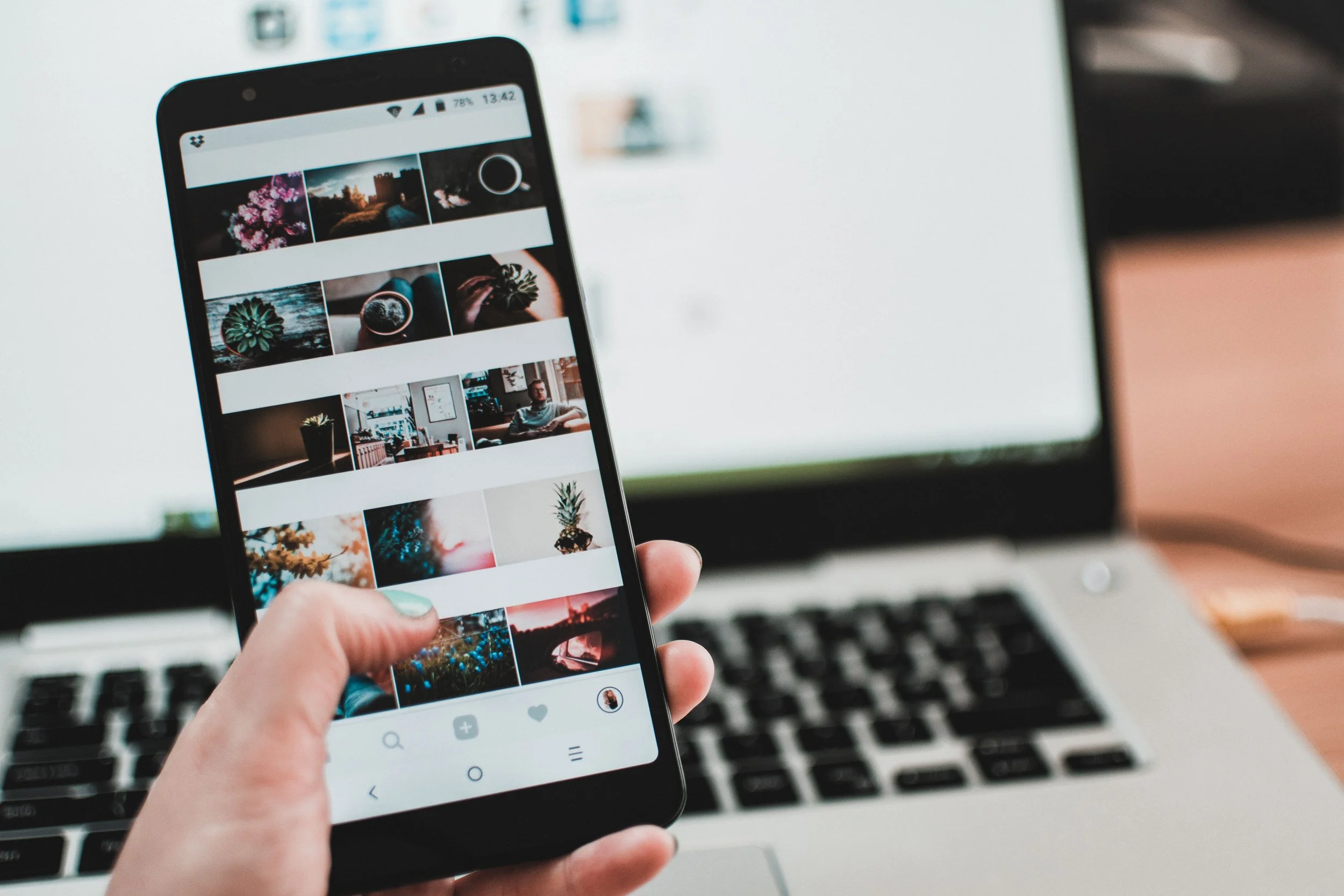
It is a fascinating paradox: while most people logically know that social media is a highlighted "reel”, they still struggle to understand that truth in the moment. Data from 2024 to 2026 suggests a gap that is growing, where users are becoming more cynical about what they see, yet they are still deeply affected by it.
THE SUPERMAJORITY
Recent surveys (e.g., Gartner 2025, ResearchGate 2024) indicate that a "supermajority" of users are aware of digital curated content, but the numbers vary by generation and social media platform:
The "Self" vs. "Others" Bias:
About 60% of users believe their own profile is an "absolute truth," but over 53% of those same users believe that others are posting "picture-perfect" lives that do not reflect reality.
Distrust is Rising:
By 2026, nearly 50% of consumers reported "social media fatigue" or disillusionment, explicitly citing a lack of authenticity and the prevalence of "highly polished" or AI-altered content as reasons for pulling back from platforms.
GEN DIFFERENCES
The level of "realization" often depends on how long a person has lived with the technology.
Gen Z (Digital Natives):
About 41% of Gen Z users now turn to social media for "human validation" and user-generated content because they trust it more than traditional ads, yet they are also the most likely to use "finstas" (or “fake Instagrams”) or "side quest" accounts. They understand the game better than anyone, yet they spend the most time—up to 3 hours a day—consuming it.
Millennials:
Frequently use social media for identity formation. Studies show they are highly aware of "curating a presence" (similar to choosing an outfit) to signal status or belonging.
Boomers/Gen X:
Generally report higher trust in certain platforms (like YouTube) for information but are statistically more susceptible to "illusory truth" effects—where seeing a post repeatedly makes it feel real, regardless of its accuracy.
THE 24% CONFIDENCE GAP
The most striking clinical finding in 2025 is that cognitive awareness does not equal emotional immunity. *
The 24% Confidence Gap:
Even though most adults say they know social media isn't "real," only about 24% feel confident they can actually distinguish a "true" post from a "false" or highly embellished one on platforms like TikTok or X.
The Neural Loop:
Even when a user knows a photo is filtered, their brain's reward system and social comparison centers still fire as if the image were an objective standard. This is why "body-positive" or "unfiltered" trends (e.g., "social media vs. reality" posts) became so popular in 2025—they act as a necessary "reset" for the brain's perception.
SUMMARY OF FINDINGS
53% to 60% estimated percentage of users acknowledge social media pages are curated content, not a direct representation of one’s life.
50% estimated percentage of users feel "disillusioned" with a lack of authenticity.
24% estimated percentage of users are confident in spotting "fake/embellished" content.
59% estimated percentage of users believe their own profile is “accurate".
FROM CYNICISM TO SELF-AWARENESS:
A PATH THAT LOOKS FORWARD
In short, while about half the world is now actively skeptical of the "perfect life" narrative, this cognitive awareness does not grant emotional immunity. The most striking clinical finding is that even when users know a photo is filtered, their brain's reward system and social comparison centers still fire as if the image were an objective standard. The fundamental urge to compare ourselves to these images lives in our subconscious.
To move past this trap, the path forward requires intentional action:
Practice Mindful Self-Observation:
Actively engage in self-observation without judgment, focusing on how your body feels rather than just how it looks.
Reframe Thought Patterns:
Consciously challenge negative self-talk by focusing on your body's abilities and strengths, rather than just how it looks.
Limit Exposure and Curate Feeds:
Consciously manage exposure to media that promotes unrealistic standards and unfollow or mute content that negatively impacts your self-perception.
BETTER TO RISE ABOVE
We hope you can take away these important points:
What you see on a screen on social media is only a piece of that person’s life. An Instagram post is just that—an Instagram post. It is not a complete biography or a complete representation of a person’s life. If you find yourself measuring your perception of reality against someone’s Facebook posts, remember that the most successful-looking lives are often the ones most confined by the pressure to appear perfect—- & perfect is what none of us are.
CHECK IN WITH YOURSELF
If the digital world feels more "real" than the physical one. Or, if the pressure to be better, than the person you already are, is weighing you down—it may be time to press pause.
Whether you are feeling stressed, overwhelmed, or that you could use a second opinion, the best support is only a few clicks away.
Talk to Someone Who Can Help:
Crisis Text Line: Text HOME to 741741
SAMHSA’s National Helpline: 1-800-662-HELP (4357)
Remember, we all need space and time to recalibrate. Nobody’s perfect.