

6 WAYS EYE-TRACKING IS BECOMING ESSENTIAL IN A TECH-DRIVEN WORLD
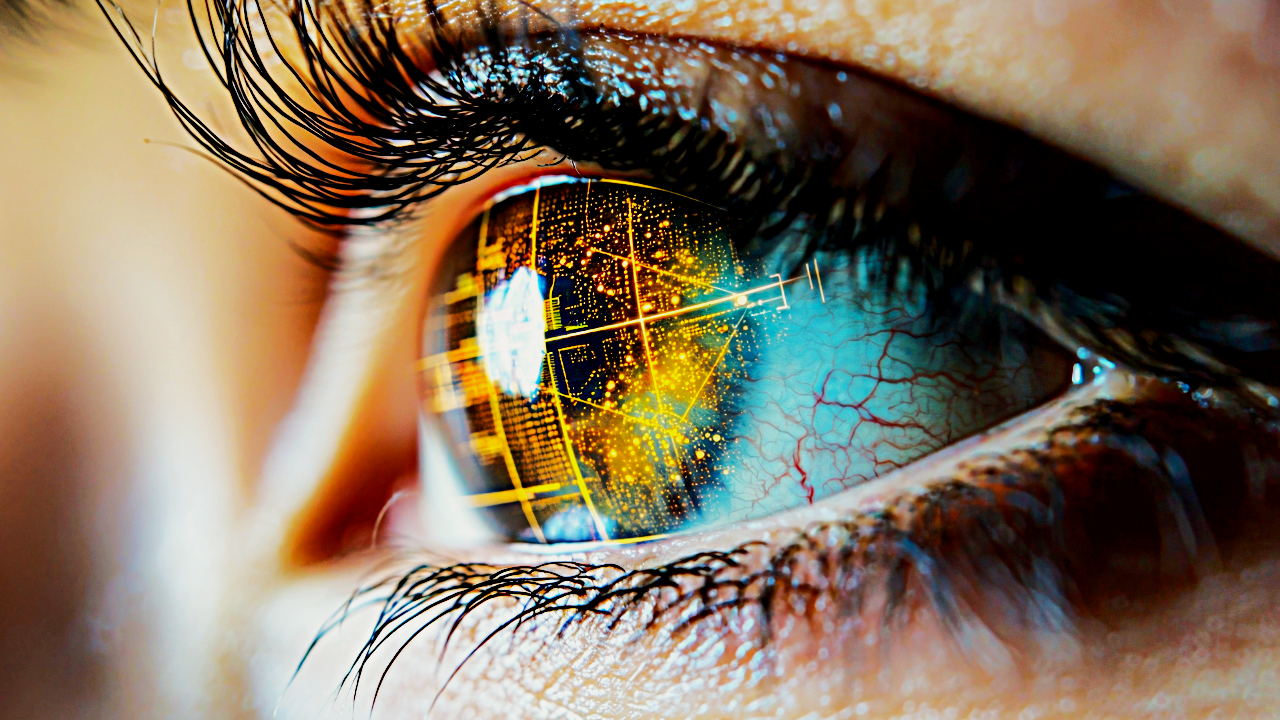
Eye-tracking has rapidly evolved from a specialized research method into a foundational technology for understanding human attention, cognition, and behavior. Modern advances in sensors, AI, and computer vision have made them more accurate, accessible, and widely applicable than ever before. MDPI
01 IT REVEALS WHAT PEOPLE ACTUALLY PAY ATTENTION TOSelf‑reported attention is often unreliable — people simply don’t notice or remember where their eyes go. Eye tracking bypasses this by directly measuring fixations, saccades, and gaze patterns, offering objective insight into what captures attention and why. Springer
Research consistently shows:
Visual hierarchy strongly influences fixation patterns
Emotional stimuli increase dwell time
Distracting layouts significantly reduce focus cognixpulse.com
These insights are invaluable in UX design, marketing, and behavioral research.
02IT DEEPENS OUR UNDERSTANDING OF HUMAN COGNITIONEye movements are tightly linked to cognitive processes such as perception, memory, and decision‑making. Eye tracking provides a non‑invasive window into how the brain processes information. Springer
Recent research highlights its role in:
Studying reading and comprehension
Measuring cognitive load
Understanding problem‑solving strategies
Identifying perceptual biases
Advanced models now integrate deep learning to interpret complex eye‑movement data, expanding applications in neuroscience and cognitive diagnostics. MDPI
03IT ENABLES MORE HUMAN-COMPUTER INTERACTION As interfaces become more immersive, eye tracking is emerging as a key input modality. Modern eye trackers can precisely measure gaze direction using infrared illumination and pupil‑corneal reflection techniques. iMotions
This enables:
Hands‑free navigation for users with motor impairments
Adaptive interfaces that respond to gaze
More intuitive AR/VR interactions
Eye tracking is also central to assistive technologies, allowing individuals to communicate or control devices using only their eyes. iMotions
04IT ENHANCES IMMERSIVE EXPERIENCES IN GAMING AND VRIn virtual environments, eye tracking improves realism and performance through:
Foveated rendering (reducing GPU load by rendering only what the user is directly looking at in high resolution)
More expressive avatars that mirror eye movements
Gaze‑based gameplay mechanics
These capabilities are increasingly integrated into modern VR systems, supported by advances in gaze‑estimation algorithm. MDPI
05BREAKTHROUGHS IN HEALTHCARE & ASSISTIVE TECHNOLOGYEye tracking is becoming a powerful tool in clinical diagnostics and monitoring. Studies show its potential in detecting or assessing conditions such as:
Dyslexia
Diabetic retinopathy
Cognitive disorders MDPI
Because eye movements reflect neurological function, they can serve as early biomarkers for cognitive decline, perceptual disorders, and rehabilitation progress.
06IT IMPROVES PRODUCT DESIGN AND DECISION-MAKINGEye tracking helps researchers and companies understand how people interact with products, interfaces, and physical environments. It reveals:
What elements attract attention first?
Which areas cause confusion?
How users navigate visual information
These insights guide improvements in marketing, packaging, automotive safety, and UX design. iMotions
THE BOTTOM LINEEye tracking matters because it provides objective, high‑resolution insight into how people perceive and interact with the world — something surveys or interviews can replicate. As research, AI, and sensor technologies continue to advance, eye tracking is becoming a cornerstone of human‑centered design, healthcare innovation, and next‑generation digital experiences. Tobii
WHERE EYE TRACKING IS CATCHING ON
R: Why Eye-Tracking Is Important
Eye-tracking serves as a foundational tool, providing objective and non-invasive clarity into cognitive processes, attention, and intent—data that cannot be accurately captured by self-reporting or traditional behavioral analytics like the clicks of a mouse.
It functions as an indispensable instrument for quantifying visual attention, cognitive load, and emotional states through pupil dilation, making it essential for innovation across several high-impact fields.
—USER EXPERIENCE (UX) aND PRODUCT DESIGN—
For product developers and designers, eye-tracking is the ultimate usability tool, revealing the difference between how a product should work and how users actually use it.
IDENTIFIES POINTS OF FRICTION:
Heatmaps and gaze plots reveal if users are missing a critical Call-to-Action (CTA) button, spending too much time searching for navigation links, or being distracted by irrelevant elements.
OPTIMIZES LAYOUT & VISUAL HIERARCHY:
It proves what elements are drawing the user's attention. Designers can ensure the most important information aligns with the user's natural scan patterns (like the F-pattern or Z-pattern) and refine the layout for maximum efficiency.
A/B TESTING VALIDATION:
It moves A/B testing beyond conversion rates by explaining why one version performed better. Did a design change actually capture attention, or did the conversion simply happen by chance?
—MARKETING aND ADVERTISING—
For digital marketing professionals and ad tech founders, eye tracking is key to unlocking the true incremental impact of visual content.
MEASURES AD ENGAGEMENT:
It provides objective proof of ad viewability, showing exactly where a consumer's gaze landed on the brand logo, the product, or the model's face and for how long.
OPTIMIZES CREATIVE DESIGN:
It helps advertisers determine the optimal placement for key messages, price tags, and brand logos in digital ads, packaging, or store displays.
—EMERGING INTERFACES—
As highlighted in your interest in spatial computing and the post-screen interface, eye-tracking is essential for new human-computer interactions:
GAZE-AS-INPUT:
In devices like AR/VR headsets, the user’s gaze becomes a primary selection mechanism. Eye-tracking enables "look-to-select" functionality, which is critical for hands-free and immersive interaction.
CONTEXTUAL COMPUTING:
It tells the AI system what the user is currently interested in, enabling the interface to be proactive and less intrusive (e.g., a smart home system only displaying controls for the object the user is looking at).
—SCIENTIFIC AND MEDICAL RESEARCH—
Eye-tracking is also a foundational tool in cognitive science and healthcare:
NEUROLOGICAL INSIGHTS:
Changes in eye movements, fixations, and pupil dilation are used to study and potentially aid in the early detection of conditions like Autism Spectrum Disorder (ASD), Parkinson's disease, and Alzheimer's.
COGNITIVE LOAD:
Pupil dilation (pupillometry) is a reliable measure of cognitive load (mental effort), allowing researchers to gauge the difficulty of a task or test.
TRAINING AND PERFORMANCE:
It helps train surgeons, pilots, and elite athletes by analyzing their visual scanning patterns to identify the most efficient way to acquire critical information in high-pressure situations.